
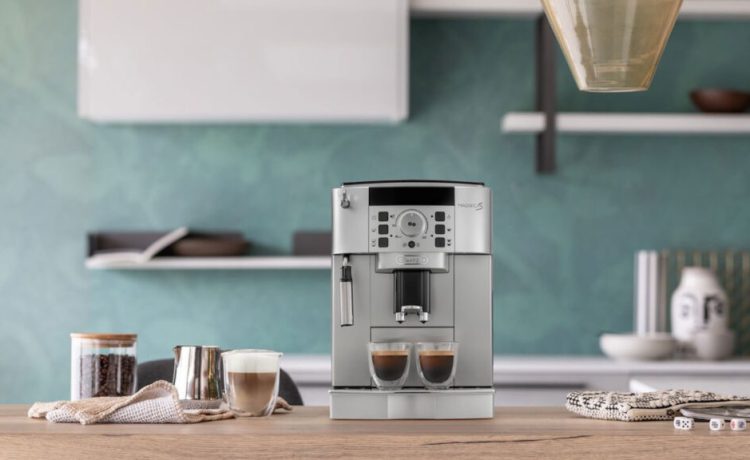
There’s a specific kind of morning dread that only hits when you press the button on your DeLonghi and… nothing happens. Or worse, it makes a sound like a blender full of gravel and proceeds to dump a puddle of lukewarm water onto your kitchen bench. It’s a bad start to the day. For most of us, the immediate reaction is to jump online and see what’s on sale at the big retailers. We’ve been conditioned to think that once a small appliance skips a beat, it’s destined for the bin.
But if you’re looking at this from a purely financial perspective—a “business case” for your household budget—tossing a DeLonghi espresso machine is almost always the wrong move. These machines aren’t designed like a cheap $20 toaster. Whether you have a Dedica, a Magnifica, or one of the high-end PrimaDonna models, these are engineered pieces of Italian machinery. They have a modular design, which is a fancy way of saying they are built to be pulled apart and put back together again.
The Real Cost of “New”
The temptation to replace is usually driven by the “new shiny thing” factor. You see the latest model with a touch screen and think it’s a necessary upgrade. But let’s look at the numbers. A mid-to-high-range DeLonghi can set you back anywhere from $800 to over $2,000. If your current machine has a blown O-ring, a faulty solenoid valve, or a pump that’s finally given up after five years of loyal service, you’re looking at a repair bill that is a tiny fraction of the replacement cost.
In many cases, the “broken” machine just needs a bit of love. Coffee is oily and acidic. Over time, those oils build up, and the calcium in our water creates scale. If you haven’t been religious about descaling, the machine eventually chokes. That doesn’t mean the motor is dead; it just means the arteries are clogged. Spending a few hundred dollars on a professional service and a couple of genuine parts is a much smarter allocation of funds than dropping two grand on a new unit that essentially does the exact same thing: makes coffee.
The Problem with the Throwaway Culture
Australia has a massive problem with e-waste. We are one of the highest producers of electronic waste per capita in the world. According to Sustainability Victoria, e-waste is growing three times faster than general municipal waste. When we chuck a coffee machine because of a minor mechanical fault, we’re contributing to a cycle that’s pretty hard to justify.
Most of the components in a DeLonghi—the heating element, the grinders, the outer casing—are perfectly fine even when the machine stops working. It’s usually a single point of failure. It might be a perished seal or a cracked water tank connection. By choosing to repair, you’re keeping all that high-quality plastic and metal out of a landfill. Plus, there’s a certain satisfaction in knowing you aren’t just another consumer trapped in the “planned obsolescence” cycle.
Why Genuine Parts Matter
If you do decide to go down the repair route, there’s a trap you need to avoid: the “cheap” third-party parts found on random auction sites. It might be tempting to save ten bucks on a generic pump or a set of seals, but it’s a false economy. DeLonghi machines operate under significant pressure—often up to 15 bars. A seal that isn’t manufactured to the exact specifications of the original is going to fail, and when it fails under pressure, it can cause more damage to the internal electronics.
Using an authorised distributor like Ellis Electricals ensures that the components you’re putting back into your machine are actually designed to be there. It’s about maintaining the integrity of the machine. If you’re trying to extend the life of an appliance by another five or ten years, you don’t do it by cutting corners on the very parts that kept it running in the first place.
The “Sunk Cost” Fallacy
People often talk about “sunk costs” when it comes to repairs. They say, “I’ve already spent $200 on repairs over the last three years, why would I spend more?” But you have to look at the utility you’re getting. If a $150 service keeps a $1,500 machine running for another two years, that coffee is costing you cents per cup.
Common Issues You Can Actually Fix
A lot of people are intimidated by the internals of a coffee machine, but DeLonghi has actually made some things very user-friendly. The infuser—the “heart” of the machine where the coffee is actually pressed—is removable in almost every model. You can take it out, rinse it under the tap, and grease it up yourself.
But when things go deeper—like a leak in the thermal block or a PCB (circuit board) issue—that’s when you need someone with a bit of “grey hair” experience. The complexity of modern automatic machines, with their sensors and milk carafes, means that a professional diagnostic is often the quickest path back to your morning latte. It’s about being realistic. If you aren’t comfortable with a multimeter and a screwdriver, don’t poke around inside. Send it to a specialised repair centre that knows the difference between an ESAM and an ECAM model.
Longevity is the Goal
At the end of the day, the business case for repair is built on longevity. We should be aiming to buy things once and keep them forever—or as close to it as possible. DeLonghi machines are one of the few consumer appliances left that actually allow for this philosophy. They aren’t glued shut; they aren’t designed to be tamper-proof. They are machines that reward owners who take care of them.
And let’s face it, once you’ve dialled in your favourite beans and found the perfect grind setting on your old machine, starting from scratch with a new one is a hassle. There’s a learning curve to every new piece of tech. Sticking with your reliable workhorse and giving it the occasional “day at the spa” with a professional service is just better business. It’s better for your wallet, better for the planet, and—most importantly—it keeps the coffee flowing without a $2,000 dent in your bank account.