

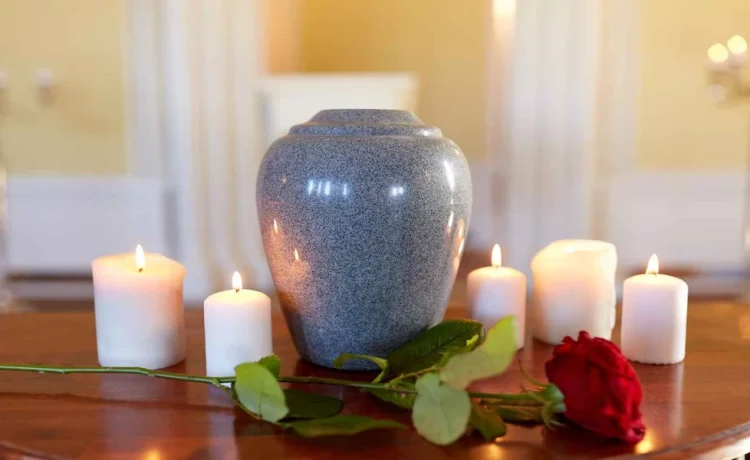
In the days after a death, families are asked to make a remarkable number of decisions while carrying the heaviest thing they have ever carried. Choices about caskets, viewings, and schedules arrive at the exact moment nobody is equipped to think clearly.
Direct cremation removes most of that. The essential care happens quietly and without ceremony attached, which leaves a family free to grieve on their own terms rather than on a calendar someone else sets.
Understanding What Direct Cremation Involves
The arrangement is deliberately simple. Your loved one is brought into care, the required permits and documentation are handled, the cremation takes place, and the ashes are returned to the family.
There is no viewing beforehand, no embalming, and no service at the funeral home. Nothing about that diminishes the care given. It simply separates the practical necessity from the remembering, so that the remembering can happen wherever and whenever the family chooses.
That separation is the whole idea. A memorial held weeks later, when relatives can actually travel and the initial shock has eased, is often more meaningful than one assembled in a matter of days.
Freeing the First Week for Grief
The traditional timeline compresses an enormous amount of activity into the days when people are least able to manage it.
Choosing among products, coordinating a service, notifying everyone in time, and receiving visitors all take real effort. Families frequently describe reaching the end of a funeral week and realizing they never had a moment to simply feel anything.
Direct cremation gives that time back. The week can be spent sitting with people who loved the same person, telling stories, and letting others help, which is what most families actually need and rarely get.
There is also relief in having fewer decisions to weigh. Grief already asks a great deal of a person, and a process that asks less of them alongside it is a genuine kindness.
Choosing a Provider Who Handles the Details
Simplicity in the arrangement does not mean simplicity in the paperwork behind it. Permits, certifications, and legal requirements still apply, and mistakes in them create delays a family should never have to navigate.
Providers such as Beyond Cremations, a licensed San Diego provider serving families across the county with transparent pricing and around-the-clock support, handle transportation, documentation, and coordination so that nothing lands back on the family unexpectedly.
Transparency deserves particular attention when comparing options. A clear list of what is included, provided upfront and without pressure, is worth more than a lower quoted figure that grows once the arrangements are underway. Providers are required to make their price lists available, and a good one offers it before you ask.
Planning a Memorial on Your Own Terms
Choosing direct cremation is not choosing to skip the remembering. It is choosing to shape it.
Families gather at a home, a beach, a park, or a church, and they do it when the people who mattered most can actually be present. The tone belongs to them rather than to a room designed for the purpose.
The options for the ashes are equally personal. Scattering in a place that meant something, keeping an urn at home, dividing keepsakes among family members, and placing a portion in a garden are all common, and none of them has to be decided immediately.
That last point matters more than people expect. Nothing forces a decision on the same schedule the rest of the process once demanded.
Planning Ahead for the People You Love
Pre-planning is worth mentioning, because it changes the experience entirely for whoever is left behind.
Recording your wishes and arranging things in advance spares your family from guessing what you would have wanted during the week they are least able to guess. It also removes the financial decisions from a moment when nobody should be weighing costs against love.
People who have arranged their own cremation often describe a sense of relief that surprises them. The task turns out to be far less difficult than expected, and finishing it lifts something they had been carrying without noticing.
Grief does not follow a schedule, and it does not require a particular set of arrangements to be honored properly. What it needs is room, and time, and people. Everything else is optional.