


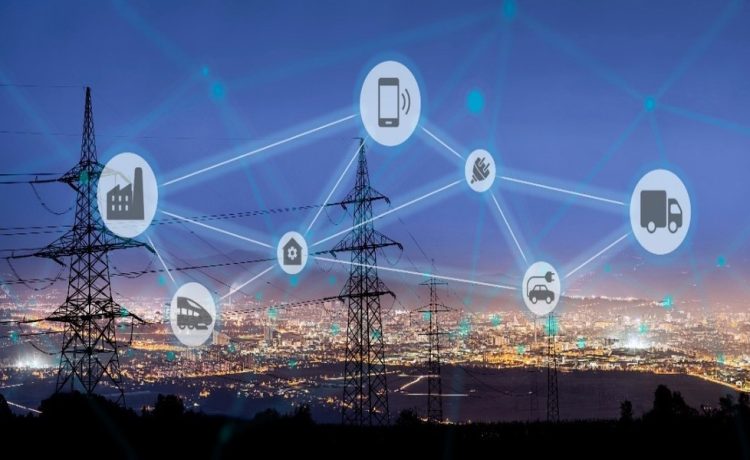
In India, power cuts have long been part of everyday life; the candles are kept in a kitchen drawer, and the habit of charging every device the moment electricity returns is due to uncertainty around supply restoration. For much of the country, an unreliable grid was simply a fact of life.
Genus Power Infrastructures has been part of India’s evolving power infrastructure landscape through advanced metering and energy management solutions designed to support grid modernisation.
The Old Grid and Its Limits
The traditional electricity grid was built for one-way travel. Power was generated at large plants, moved through transmission lines, and delivered to homes and businesses. The system lacked visibility into real-time network conditions.
Faults were found when the lights went out. Demand was estimated rather than measured in real time. And when something went wrong, the response depended on how quickly a person could get to the problem.
This worked well enough when electricity use was predictable, and the supply was simple. Today, neither is true. Demand spikes faster than ever. Rooftop solar panels send power back into a grid never designed to receive it.
Electric vehicles charge in uneven bursts that strain local networks. The old model of managing a grid by instinct and experience is no longer equal to the task.
What Technology Has Made Possible
The shift happening now is not about faster equipment or newer cables alone. It is about the grid gaining something it never had before: awareness.
Smart sensors placed across the network feed a constant stream of data back to control centres. Algorithms process that data and flag problems before they become failures.
Substations that once needed manual checks can now report their own status automatically. The grid is increasingly capable of automated monitoring and remote diagnostics.
Artificial intelligence has added another layer. Where older systems reacted to faults, AI-enabled analytics platforms can help utilities anticipate potential failures. By studying patterns in voltage, load, and equipment behaviour, these systems can identify a transformer likely to fail before it does, or a feeder section approaching dangerous stress levels.
The shift from reactive to predictive is one of the most significant changes in how power networks are managed.
The Role of the Smart Energy Meter
At the consumer end of this transformation sits the smart energy meter. It is easy to think of a meter as just a billing device. But in a connected grid, a smart energy meter is also a sensor.
It reports consumption at short intervals, detects anomalies, and communicates outages the moment they happen. Multiply that across millions of households, and you have a live picture of how the entire distribution network is performing at any given moment.
This directly matters for predictability. When utilities can see consumption patterns at the feeder and transformer level in close to real time, they can plan more accurately, shift loads, anticipate peaks, and respond to problems in minutes rather than hours. The smart electricity meter acts as an important endpoint in the connected grid ecosystem.
In India, where tens of millions of such meters are now being deployed under the national smart metering programme, this shift is showing results. Areas with high smart electricity meter penetration have demonstrated improvements in fault visibility, loss reduction, and operational responsiveness. The data flowing from these devices is translating into a better everyday experience for consumers.
Renewables and the New Complexity
The push toward solar and wind power has added urgency to all of this. Renewable energy is clean, but not constant. The sun does not always shine when demand peaks. Wind does not blow on a schedule. Feeding large amounts of variable generation into a grid requires dynamic grid balancing on a scale that manual management cannot achieve.
This is where AI-driven grid management becomes not just useful but necessary. Systems that forecast solar output based on weather data, predict demand curves through the day, and automatically reroute power when supply drops are essential to making renewable energy work reliably. Without this intelligence, clean energy ambitions run into hard operational limits.
Battery storage is part of the answer. But storage alone is not enough without the data systems to determine when to charge, when to discharge, and where power is most needed at any given moment.
India’s Grid and the Road Ahead
India’s grid is large, varied, and under pressure from multiple directions. Rising demand, ambitious renewable targets, and a distribution sector still evolving all converge on the same infrastructure.
Genus Power, with its focus on metering and energy management, sits at a critical part of this picture. The ability to measure accurately, communicate reliably, and feed useful data into broader grid management systems is what makes transformation possible at the ground level.
The technology exists. The policy direction is clear. The national push toward smart metering and grid intelligence is backed by real investment and regulatory intent.
What remains is the work of connecting all the pieces, from the smart energy meter on a household wall to the algorithms balancing load across an entire state. That work is well underway. And for the first time in a long time, a grid that simply delivers power when it is needed feels like a realistic goal.