


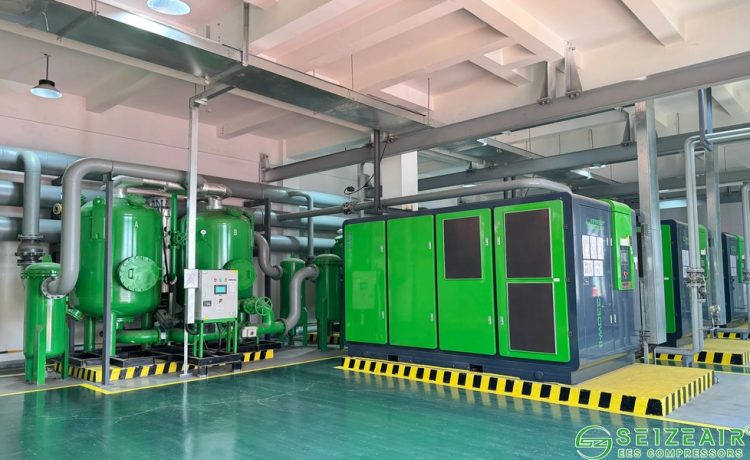
Compressed air systems are essential across many industrial sectors, supporting everything from manufacturing and automation to food production and heavy engineering. As businesses continue focusing on energy efficiency, operational reliability, and sustainability, more companies are investing in advanced compressor technologies that can deliver higher performance with lower running costs.
One technology gaining increasing attention is industrial turbo compressors, which are designed to provide efficient, oil-free compressed air for demanding industrial applications.
What Are Industrial Turbo Compressors?
Industrial turbo compressors are high-speed centrifugal compressors that use advanced aerodynamic technology to generate compressed air efficiently. Unlike traditional positive displacement compressors, turbo compressors rely on rapidly rotating impellers to compress air.
These systems are commonly used in industries requiring:
- Continuous airflow
- High energy efficiency
- Oil-free compressed air
- Reduced maintenance requirements
- Large-scale production support
Turbo compressors are particularly well suited for facilities with high air demand and continuous operational schedules.
How Turbo Compressors Differ from Traditional Compressors
Traditional rotary screw compressors compress air through mechanical displacement, while turbo compressors use centrifugal force and high-speed rotation.
This difference in operating design offers several advantages.
Fewer Moving Parts
Turbo compressors generally contain fewer mechanical contact components compared to some traditional compressor systems.
This can lead to:
- Reduced wear and tear
- Lower maintenance requirements
- Improved reliability
- Longer service intervals
Fewer moving parts also help minimise vibration and mechanical friction.
Oil-Free Air Production
Many industrial processes require clean, contamination-free compressed air. Turbo compressors are often designed to deliver oil-free air, making them suitable for industries with strict quality standards.
This is particularly important in sectors such as:
- Food and beverage production
- Pharmaceuticals
- Electronics manufacturing
- Healthcare
- Chemical processing
Oil-free systems help reduce contamination risks and support regulatory compliance.
The Energy Efficiency Advantage
Energy consumption is one of the biggest operating costs associated with compressed air systems. Turbo compressors are known for their ability to operate efficiently, particularly in high-demand environments.
Lower Energy Consumption
Advanced aerodynamic designs and high-speed motors allow turbo compressors to generate compressed air with reduced energy waste.
Many systems include features such as:
- Variable speed control
- Intelligent monitoring systems
- High-efficiency motors
- Reduced internal friction
These technologies help businesses lower electricity costs and improve overall operational efficiency.
Reduced Heat Generation
Turbo compressors often produce less heat compared to conventional systems due to reduced mechanical friction.
Lower heat generation can improve:
- System reliability
- Cooling efficiency
- Overall equipment lifespan
This also contributes to a more energy-efficient operating environment.
Industries That Benefit from Turbo Compressors
Turbo compressors are commonly used in industries where large volumes of clean compressed air are required continuously.
Manufacturing
Manufacturing facilities use turbo compressors to power automation systems, machinery, and production lines efficiently.
Food and Beverage
Oil-free compressed air is essential in food production environments to help maintain hygiene and product quality standards.
Pharmaceutical Production
Pharmaceutical facilities require contamination-free compressed air for packaging, processing, and production applications.
Electronics Manufacturing
Sensitive electronic components often require ultra-clean compressed air during assembly and manufacturing processes.
The Importance of Proper System Sizing
Selecting the correct compressor size is essential for achieving maximum efficiency.
Oversized systems may:
- Waste energy
- Increase operating costs
- Create unnecessary wear
Undersized systems can struggle to maintain pressure levels and reduce productivity.
Professional system assessments help businesses identify the most suitable compressor setup for their operational needs.
Maintenance and Reliability Benefits
Although turbo compressors are advanced systems, many models are designed with low-maintenance operation in mind.
Longer Service Intervals
With fewer moving components and reduced mechanical contact, turbo compressors often require less frequent maintenance compared to traditional systems.
Real-Time Monitoring
Many modern turbo compressors include smart monitoring technology that allows operators to track:
- Energy consumption
- Pressure levels
- System performance
- Maintenance alerts
This helps businesses identify issues early and improve operational reliability.
Environmental and Sustainability Considerations
Sustainability has become an important priority for many industrial organisations. More energy-efficient compressed air systems can help reduce environmental impact while lowering operational costs.
Turbo compressors may support sustainability goals through:
- Reduced electricity consumption
- Lower carbon emissions
- Oil-free operation
- Improved energy efficiency
These benefits can contribute to both financial savings and environmental responsibility.
FAQ
What are industrial turbo compressors used for?
Industrial turbo compressors are used to provide efficient, high-volume compressed air for manufacturing, food production, pharmaceuticals, electronics, and other industrial applications.
Are turbo compressors more energy efficient?
Yes. Turbo compressors are often designed to reduce energy consumption through advanced aerodynamic technology and efficient motor systems.
Do turbo compressors provide oil-free air?
Many industrial turbo compressors are designed to produce oil-free compressed air, making them suitable for industries requiring high air purity.
Are turbo compressors expensive to maintain?
Turbo compressors often require less maintenance than traditional compressor systems due to fewer moving parts and reduced mechanical wear.
Which industries benefit most from turbo compressors?
Industries such as manufacturing, pharmaceuticals, food production, electronics, and chemical processing commonly benefit from turbo compressor technology.
Conclusion
As industrial operations continue prioritising efficiency, reliability, and sustainability, turbo compressor technology is becoming an increasingly attractive solution for businesses with demanding compressed air requirements.
Industrial turbo compressors offer significant advantages through lower energy consumption, oil-free air production, reduced maintenance demands, and reliable high-volume performance. For many organisations, investing in advanced compressor technology can support both operational efficiency and long-term cost savings.