


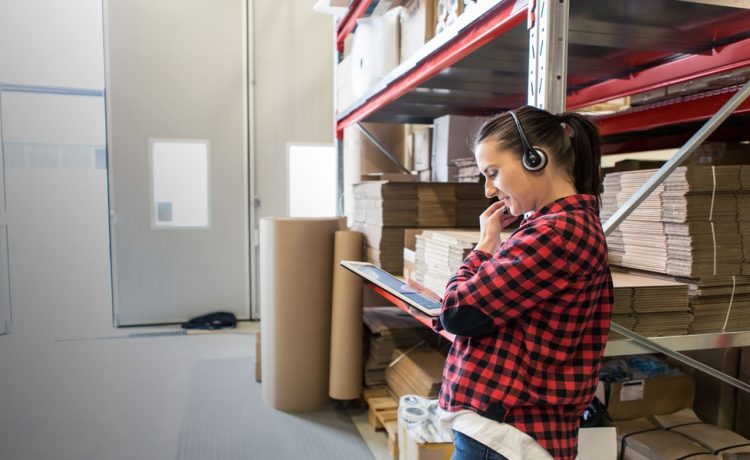
In recent years, supply chains have had to operate through repeated disruptions. Pandemic after-effects, geopolitical uncertainty, climate events, and unstable demand patterns have made resilience a central concern in logistics and supply chain management. The warehouse management system market is expected to grow at a CAGR of 17.98% between 2026 and 2031.
That shift reflects a simple reality: resilience is no longer measured only by cost efficiency. It is now judged by how well a business can see change early, respond with speed, and continue operating without major service breakdowns. That is why warehouse digitalisation has moved to the centre of the discussion.
The Hidden Weak Link: Traditional Warehousing in a Modern Supply Chain
Many organisations have improved transport planning, forecasting, and network design, but the warehouse often remains less mature than the rest of the supply chain.
- In many cases, processes are still partly manual, information is updated with a delay, and decisions depend too much on follow-up rather than real-time control. That creates a serious weakness.
- When inventory data is not current, the impact extends well beyond the warehouse. Order commitments become harder to manage. Replenishment decisions lose accuracy. Dispatch planning becomes reactive.
- Small gaps in visibility can quickly turn into service issues across multiple nodes. This is why digitalisation should not be treated as a future enhancement. It has become a basic requirement in modern supply chain solutions.
What Warehouse Digitalisation Really Means?
Warehouse digitalisation is not limited to automation equipment. It starts with better process control and better information.
- A strong warehouse management system helps businesses manage inventory, orders, manpower, and dispatch through one connected setup.
- When that system is linked with ERP, warehouse activity becomes more aligned with the wider business.
- Real-time inventory visibility is a major part of this shift. Digitalisation becomes the link between physical warehouse work and strategic decision-making inside integrated logistics environments.
Three Ways Warehouse Digitalisation Strengthens Supply Chain Resilience
- The first area is visibility. When stock positions are updated in real time across locations, businesses can spot imbalances earlier. This improves coordination between warehousing and transportation and reduces uncertainty when one region faces a delay or shortage.
- The second area is agility. Demand does not move in a straight line, and warehouses now need to adjust quickly. A digital warehouse can rework picking priorities, reassign resources, and handle new SKUs or channels with less disruption than a manual setup.
- The third area is risk management. Historical data, cleaner transaction records, and better alerts help businesses act before problems grow. Stockout risk becomes easier to identify.
The Role of Integrated Logistics in Enabling Resilience
Digital warehouses are most effective when they are part of a connected operating model. A warehouse may improve its own performance, but the real gain comes when warehousing, transportation, and distribution work with the same data and the same service priorities. That is where integrated logistics becomes important. When silos are removed, response time improves. Decisions are made faster because teams are not working with separate versions of the same information.
Lead-time variation also reduces because warehouse output is better aligned with downstream movement. Organisations that invest in connected supply chain solutions tend to build stronger resilience because they improve the system as a whole, not only one function. Mahindra Logistics is part of this change in the logistics sector.
From Efficiency to Strategic Advantage
Warehouse digitalisation was earlier seen mainly as a way to make daily work easier and improve efficiency. That is no longer the full picture. Today, it plays an important role in service reliability, order accuracy, and customer trust. Businesses are now expected to share timely updates, maintain accurate inventory records, and respond faster when plans change.
This is why warehouse capability now shapes competitiveness. Better visibility leads to better decisions. Better decisions lead to more stable service. Over time, that consistency strengthens customer trust. In practical terms, digitalisation is no longer just an operational improvement. It has become part of how businesses defend service levels in uncertain conditions.
Conclusion: Resilience Is Built from the Inside Out
Supply chain resilience begins inside day-to-day operations. If warehouses continue to run with limited visibility and delayed information, the wider network will always remain vulnerable. A modern warehouse management system should therefore be seen not only as software, but as an operational foundation for stronger control, faster response, and more dependable execution. The businesses that prepare well for the next decade will be those that treat digital warehouses as essential infrastructure within logistics and supply chain management.